
Héctor Villagrán
Profesor de Estudios Latinoamericanos de la Universidad de la Lengua y Cultura de Beijing (BLCU). Director del Centro para Diálogo Civilizacional China-ALC del Centro Mundial de Sinología de BLCU. Máster en Derecho Chino de la Universidad de Tsinghua. Abogado de la Universidad de Guayaquil. Ex Ministro de Transporte y Obras Públicas del Ecuador y Ex Representante de Comercio e Inversiones del Ecuador en China.

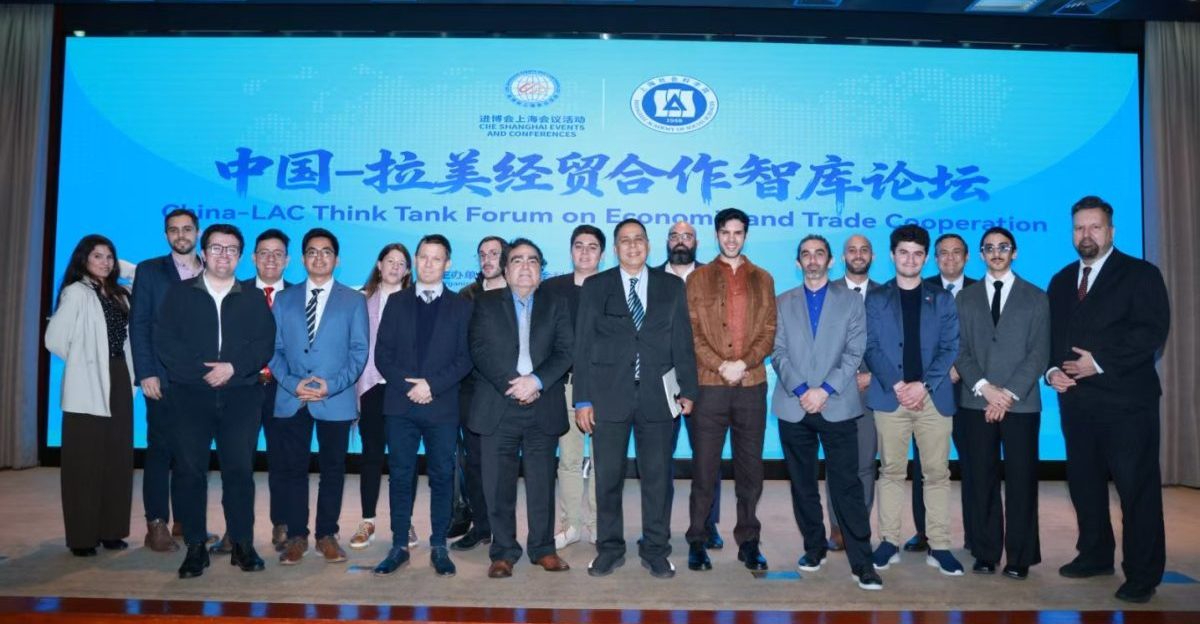
Discurso pronunciado durante el «China-LAC Think Tank Forum on Economic and Trade Cooperation» celebrado el 07 de noviembre en la ciudad de Shanghai, China.
I’ll walk you through the evolution, scale, and examples of Chinese infrastructure investment in Latin America from 1999 to today. I’ll cover: phases and drivers, finance instruments, country examples with named projects and companies, benefits and risks, and a short conclusion with questions for discussion.
1) Quick framing and timeline (1999 until today)
From the late 1990s into the 2000s, China’s engagement with Latin America shifted from mainly trade in commodities to large-scale financing and on-the-ground construction. Three broad phases are useful:
- 1999–2008: trade growth and the first government-to-government energy and telecom deals.
- 2009–2016 (post-global crisis / commodity boom): rapid expansion of loans (often from Chinese policy banks) for big infrastructure, energy and transport projects.
- 2017–present: diversification — more commercial FDI, ports, rail, “new infrastructure” (telecom, data, renewables), and both state and private Chinese builders active regionally.
This expansion is sizeable: a recent monitor counted ~294 Chinese infrastructure projects in Latin America through 2024 worth nearly USD 130 billion — showing both depth and geographic spread.
2) Why infraestructure? (drivers from both sides)
Latin American governments seek capital, technology and fast delivery for roads, ports, hydropower, rail and telecom. China’s offer often includes bundled finance + contractor packages.
- China’s motives: secure commodity supplies, expand market access, build logistics links (ports, shipping), place Chinese construction and equipment firms overseas, and broaden geopolitical partnerships.
Financing is typically a mix of concessional/ commercial loans (China Exim Bank, China Development Bank), contractor export-credit backed deals, and outright FDI via state or private firms.
3) Scale and where the money went (high-level distribution)
Scholars and databases tracking Chinese lending and investment in the region show a concentration in larger economies. Over recent years Brazil has been the largest recipient of Chinese investment in the region, followed by Argentina, Mexico, Peru and Chile — with Brazil often receiving the largest single-country share (roughly a third of regional investment in some multi-year tallies).
(If you want country-by-country numerical tables for a presentation slide, the Inter-American Dialogue’s China–Latin America Finance Database and the China Global Investment Tracker are the primary public sources for loan and project-level numbers.)
4) Country case examples – projects, firms and amounts (concrete cases)
Peru — Chancay port (port logistics)
- Project: Chancay deep-water port (major new Pacific megaport north of Lima).
- Chinese company: COSCO (COSCO Shipping Ports led the project; COSCO has been the prominent Chinese developer/operator).
- Scale/notes: Announced as a roughly USD 1.3–1.4 billion project; positioned as a gateway linking Asia and South America, and highlighted as part of China’s broader push to expand maritime logistics capacity in the Pacific. This is a flagship example of Chinese port investment.
Also in Peru: other Chinese firms (e.g., Jinzhao) have won port construction contracts (Reuters reporting a ~USD 405 million contract awarded to a Chinese firm for a port near Ica), showing China’s active role across multiple Peruvian port projects.
Ecuador — Coca Codo Sinclair Hydropower (large hydro)
- Project: Coca Codo Sinclair hydroelectric complex (1,500 MW) — Ecuador’s largest.
- Chinese company: Sinohydro (subsidiary of PowerChina) was the EPC contractor; financing/contracting was part of broader China-Ecuador cooperation.
- Notes: The plant began commercial operation in 2016 but has faced technical problems and disputes; in 2025 Ecuador and PowerChina reached an agreement to move toward ending arbitration and negotiate operation/maintenance steps — illustrating both the scale and the risks of complex infrastructure delivered rapidly.
Argentina — Rail & freight rehabilitation (Belgrano Cargas and others)
- Project(s): Belgrano Cargas railway rehabilitation (and related rail modernization).
- Chinese firms and finance: China Development Bank / Chinese builders and equipment suppliers (China Railway Construction, China Machinery Engineering Corp and others) were involved; Argentina signed multi-billion dollar loan/contract packages in the mid-2010s (e.g., a $2.1 billion loan agreement to revive Belgrano Cargas; broader financing announcements in 2014 included multiple China-Argentina packages).
China has also discussed rail corridors to support extractive exports (e.g., proposals to link Vaca Muerta resources), showing the strategic link between mining/energy and transport infrastructure.
Brazil — Large diversified projects & market share
- Pattern: Brazil gets the largest share of Chinese FDI in the region over long windows — major Chinese activity includes power generation and grid investments, mining partnerships, and industrial acquisitions. Between the 2000s and early 2020s Brazil attracted by far the biggest single-country share in many trackers. Major Chinese construction and engineering groups are active in bridge, port and power plant projects across Brazil.
(Individual project names vary across states — the important point is the scale: Brazil frequently leads in cumulative FDI and construction flows from China.)
Ports more broadly — Chinese builders/operators
Chinese state builders and port operators (COSCO, China Communications Construction Company / China Harbour Engineering (CCCC), and other state-owned firms) have been central to port projects across the region. A CSIS review recently identified dozens of port projects tied to Chinese companies across Latin America and the Caribbean, signaling strategic interest in maritime logistics.

5) Typical finance and construction model (how deals are structured)
Loans + EPC package: Chinese policy banks (China Exim Bank, China Development Bank) provide loans often tied to hiring Chinese contractors and suppliers — “package deals.”
- Concessions & PPPs: Ports and some concessions take the form of long-term concessions to Chinese operators (e.g., COSCO at Chancay).
- Pure FDI / M&A: Chinese firms also buy assets or invest directly (power, telecom, renewables).
- Commercial FDI: Increasingly important after the commodity boom slowed — more private Chinese firms and commercially oriented deals.
6) Benefits observed
Benefits observed
- Rapid delivery of infrastructure that governments say they need (ports, dams, rail).
- Access to Chinese finance when other lenders are limited or conditionality differs.
- Technology and equipment transfer for certain sectors (renewables, rail rolling stock).
7) Risks and challenges
- Technical and quality problems: The Coca Codo Sinclair example shows how big hydro projects can generate long disputes over defects and O&M.
- Debt & conditionality concerns: Heavy loan reliance can raise fiscal questions; transparency on terms has often been an issue. The Inter-American Dialogue and other trackers have aimed to shed light on such lending patterns.
- Environmental & social impacts: Large dams and extractive-linked logistics raise local opposition and environmental scrutiny.
- Geopolitical anxieties: Port control and strategic logistics assets attract scrutiny from outside powers and domestic stakeholders (e.g., debates over port security and foreign control). CSIS and other institutions have mapped potential strategic concerns tied to port projects.
8) Recent trends (late 2010s – 2020s)
- From commodities to diversification: More investment in telecommunications, renewable energy and “new infrastructure.”
- Ports and logistics remain central: New ports and shipping routes (e.g., direct routes to Chancay) accelerate China-Latin American trade linkages. Reuters and AP reporting on new shipping routes and port commissioning confirm this push.
- Scrutiny & renegotiations: Where technical problems or political changes occur, countries sometimes renegotiate or litigate — the Coca Codo Sinclair arbitration and 2025 settlement talks are a concrete example.
9) Short policy takeaways (for governments & students)
- Assess full life-cycle costs (construction + O&M). Rapid construction can mask long-term maintenance liabilities.
- Transparency of terms is essential — public disclosure of loan conditions and concession terms reduces political risk.
- Local content, training and integration: Negotiating supplier/joint-venture clauses that build local capacity produces longer-term benefits.
- Diversify financing sources to avoid overexposure to any single creditor or political risk.
10) Closing summary
Since 1999 Chinese engagement in Latin American infrastructure has grown from a few state projects to hundreds of projects worth tens of billions — spanning ports, hydropower, rail, and more. The pattern is large, fast, and strategically aligned with trade/commodity interests: ports (COSCO, CCCC), large hydropower and energy works (Sinohydro/PowerChina), and rail/equipment (China Railway construction groups) are all key players. The region has seen major benefits (new capacity, connectivity) alongside well-documented challenges (technical disputes, public transparency and debt concerns). For anyone tracking global infrastructure flows, the Inter-American Dialogue and China Global Investment Tracker provide indispensable datasets to drill into country-level numbers and project detail.
Questions for discussion
- Which policy safeguards best balance the need for rapid infrastructure delivery with fiscal prudence?
- How can Latin American governments better leverage Chinese technology and training to create lasting local value?
- What are the geopolitical implications for regional supply chains as China builds ports and logistics hubs?